
Introduction
For too long, moving has been dismissed as unskilled work. The stereotype of movers as random guys in T-shirts who simply lift boxes still lingers, hurting the reputation of hardworking professionals across the industry. The truth is different: moving is a skilled trade that demands precision, strength, empathy, and technical knowledge.
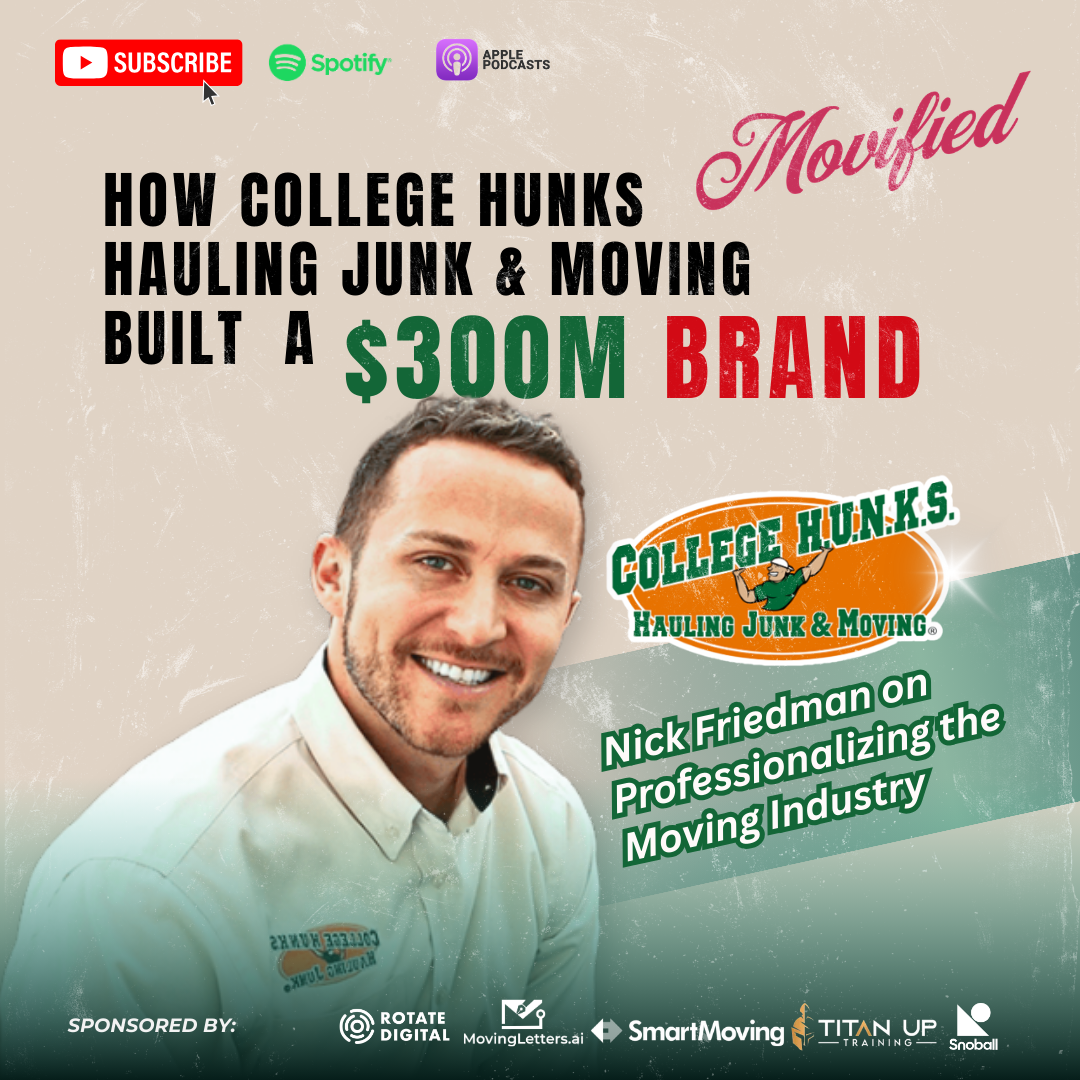
In this Movified Podcast episode, host Mark Hirschi sits down with Nick Friedman, co-founder of College Hunks Hauling Junk & Moving, to uncover how he and his business partner, Omar Soliman, transformed a college side hustle into a $300M national franchise brand.
Nick’s insights offer a masterclass for moving company owners, franchisees, and industry professionals who want to elevate their operations. He shares how to position moving as a skilled profession, why ongoing training is the backbone of growth, how franchising really works, and the cultural principles that allow College Hunks to scale across North America.
Whether you run a single truck or a multi-location operation, the lessons here will show you what it takes to build a trusted brand in the moving and storage industry.
Key Takeaways
What You’ll Learn:
- Moving is skilled labor: Customers should value movers as trained professionals, not commodity labor.
- Training is ongoing: Both technical and soft skills must be reinforced continually.
- Franchising requires heavy lifting: Growth demands infrastructure, capital, and accountability systems.
- Culture matters as much as metrics: The balance of “Sesame Street and Wall Street” keeps teams motivated yet accountable.
Table of Contents
- Moving Is Skilled Labor, Not a Commodity
- The Journey from College Hustle to $300M Franchise
- Building the College Hunks Training System
- Franchising Realities: Growth, Mistakes, and Hard Truths
- Accountability and Culture: Sesame Street Meets Wall Street
- The Power of Partnership: Why Two Founders Were Better Than One
- Lessons for Today’s Moving Company Owners
- Why Choose Movified
- Conclusion
Moving Is Skilled Labor, Not a Commodity
Nick Friedman’s strongest message is clear: moving is skilled labor—full stop.
The industry has long been tarnished by bad actors. From hostage load scandals to untrained crews damaging furniture, consumers developed a perception that movers are unreliable. These negative stories created a stigma that moving was just “unskilled grunt work.”
But the reality has changed. In the last decade, the industry has rapidly professionalized. Consumers now expect movers who are trained, insured, and trustworthy. Nick stresses that moving companies must present themselves the same way a plumber, electrician, or HVAC contractor does—offering technical expertise that deserves respect and fair pricing.
“We’re not just sending bodies out to lift furniture. This is technical work that requires training, trust, and professionalism.” — Nick Friedman
This repositioning helps justify premium pricing. Customers may shop for the lowest bid when they see moving as a commodity, but once they recognize it as a skilled service, they are willing to pay for reliability, protection, and peace of mind.
The Journey from College Hustle to $300M Franchise
The College Hunks story began with a borrowed cargo van and an idea: college students could make money hauling junk. Friedman and Soliman quickly realized their model had potential, but they also understood that their own labor wasn’t scalable.
Instead of simply being the strongest guys in the room, they focused on building processes, systems, and brand identity. The quirky, memorable name—College Hunks Hauling Junk—gave them instant recognition. Customers loved the fun, approachable branding.
By the time they added moving services in the late 2000s, the foundation of their business was ready to support expansion. The recession had reduced junk hauling demand, but moving was still a necessity. This pivot positioned them for rapid growth.
From there, the company grew into a household name. Appearances on Shark Tank, Undercover Boss, and other TV shows built credibility. Today, College Hunks has 300+ locations across the U.S. and Canada and generates $300M+ in annual sales.
Building the College Hunks Training System
Nick is passionate about training. His philosophy: “If you’re not training, you’re not gaining.”
Unlike other blue-collar industries where technicians work out of sight, movers interact directly with clients in their homes, handling deeply personal belongings. This means training must cover both technical and soft skills.
Technical training includes:
- Proper wrapping and packing methods
- Navigating doorways, stairways, and tight spaces
- Loading and unloading for efficiency and safety
Soft skills include:
- Communicating with nervous or stressed customers
- Building trust as strangers enter someone’s personal space
- Handling complaints or concerns with empathy
To codify their approach, College Hunks created The College Hunks Way. At its core is the acronym H.U.N.K.S.:
- Honest
- Uniformed
- Nice
- Knowledgeable
- Service
This simple framework communicates exactly what customers should expect and what employees must embody.
Franchising Realities: Growth, Mistakes, and Hard Truths
Franchising was always part of the College Hunks plan, but Nick admits they moved too quickly.
Early Missteps:
- Expanding to Florida, California, and Denver before fully optimizing their first DC location
- Selling territories too large
- Awarding franchises to anyone who could pay, regardless of cultural alignment
The reality: franchising is not passive income. It requires hundreds of thousands, if not millions, to build the infrastructure. Success only comes after scaling to 100+ franchisees when royalties can sustain operations.
“Franchising isn’t a shortcut. It’s a heavy lift. But done right, it can scale your brand into a household name.” — Nick Friedman
Despite the struggles, franchising allowed College Hunks to achieve national recognition. But Nick now cautions others: be deliberate, screen franchisees carefully, and consider corporate-owned expansion before franchising too early.
Accountability and Culture: Sesame Street Meets Wall Street
Culture is central to College Hunks’ success, but culture without accountability is a recipe for failure. Nick explains that leaders must balance warmth with results.
He calls it Sesame Street meets Wall Street:
- Sesame Street = compassion, friendliness, values-driven culture
- Wall Street = hard accountability, metrics, and performance-based toughness
Franchisees are not employees, so accountability must be enforced through brand standards. Metrics like Net Promoter Scores (NPS), service recovery rates, and adherence to training systems all factor into whether a franchisee meets expectations.
In extreme cases, College Hunks has transitioned owners out of the system to protect the brand. But more often, accountability involves corrective actions and ongoing support.
The Power of Partnership: Why Two Founders Were Better Than One
Nick acknowledges he could not have built the company alone. His partnership with Omar Soliman was critical—not just for workload, but for accountability, emotional support, and vision alignment.
“Could we have gotten this far without one another? No. Would we have even wanted to? Also no. Leadership can be lonely. Sharing the ups and downs with someone you trust makes it worthwhile.” — Nick Friedman
For owners considering partnerships, Nick stresses alignment on values, trust, and openness. Partnerships without those ingredients will lead to conflict. But when they’re in place, partnerships can double the chances of success.
Lessons for Today’s Moving Company Owners
For moving company owners listening to Nick’s story, here are practical takeaways:
- Position moving as skilled labor. Charge accordingly.
- Codify values and culture. Communicate them internally and externally.
- Invest in training. Blend classroom, video, and on-the-truck methods.
- Scale deliberately. Don’t chase franchising too soon.
- Balance culture and accountability. Sesame Street + Wall Street works.
- Consider partnerships carefully. Alignment matters as much as skill.
These lessons apply whether you’re running a single truck or exploring franchising opportunities.
Why Choose Movified
At Movified, we bring insider access to the moving industry’s most respected voices. Hosted by Mark Hirschi, a mover with decades of leadership experience and owner of Salmon’s Moving & Storage, the podcast delivers real strategies you can apply today.
Guests like Nick Friedman don’t just share surface-level stories—they provide proven frameworks for growth, franchising, training, and culture. That’s why movers across North America turn to Movified as the go-to content hub for scaling smarter.
Conclusion
The rise of College Hunks Hauling Junk & Moving from a college project to a $300M franchise brand shows what’s possible when movers embrace professionalization, training, and culture. By treating moving as skilled labor, investing in ongoing systems, and holding teams accountable, you can elevate your company from a small operation into a trusted brand.
“If you’re not training, you’re not gaining.” — Nick Friedman
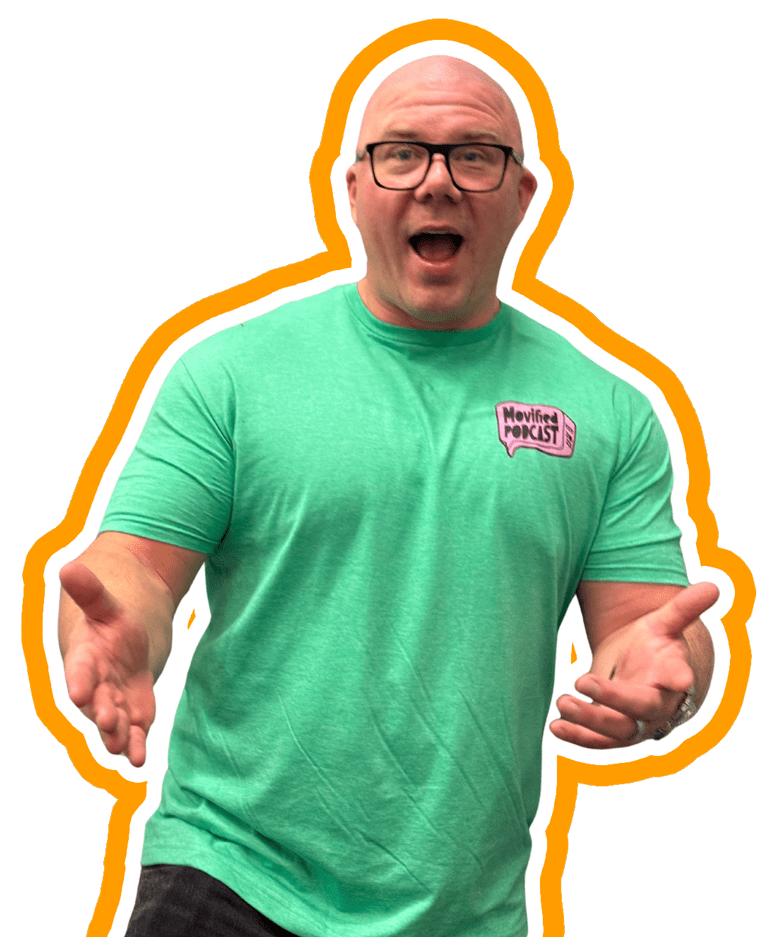
Meet The Host
Mark Hirschi is the founder and host of Movified. With over a decade in the moving and storage industry, Mark combines real-world leadership experience with a passion for mentorship and elevating industry standards.