

Introduction
Many moving company owners put off choosing a CRM because they think they aren’t ready. The truth? Waiting too long can cost more than switching later. Without a system, owners either track nothing or try to track everything—and both lead to wasted time, missed jobs, and unclear financials.
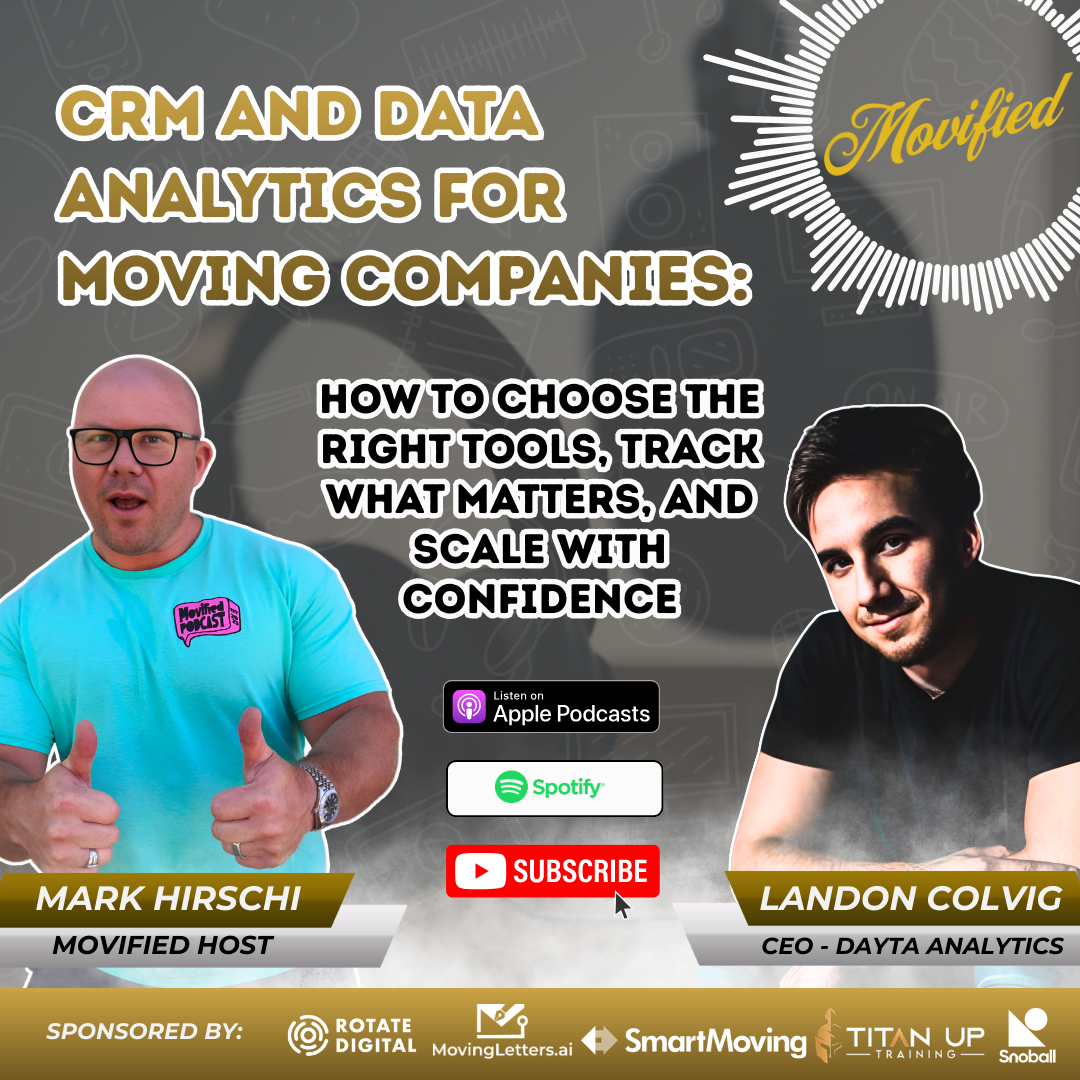
In this Movified Podcast episode, host Mark Hirschi speaks with Landon Colvig, a data consultant who specializes in simplifying analytics for business growth. Together, they explain why movers should start simple, adopt a CRM for moving companies sooner than later, and focus on the data that actually drives revenue.
This article is for moving company owners, franchisees, and industry professionals who want practical guidance on CRMs, KPIs, dashboards, and the smart use of AI.
Key Takeaways
What You’ll Learn:
- Start small but don’t wait too long: Begin with Google Sheets, then move to a CRM as soon as manual tracking becomes too costly.
- Track only the vital few KPIs: CAC, revenue per customer, and conversion rates matter most early on.
- Pilot before you commit: Test new CRMs with real staff workflows before signing long contracts.
- Centralize data before AI: Clean dashboards come first, automation comes later.
Table of Contents
Why CRM for Moving Companies Starts with Simplicity
The best starting point is not to pick a flashy CRM it’s to begin tracking consistently.
Landon recommends that movers start with Google Sheets. Enter leads, note follow-ups, and record booked jobs. As time spent on data entry increases, compare it to the subscription cost of a CRM. When your manual hours outweigh the software fee, the decision is clear.
Signs it’s time for CRM:
- Leads slip through the cracks.
- Dispatchers constantly ask for tomorrow’s schedule.
- Sales reps forget to follow up.
- You can’t measure ad performance.
“The growth you miss out on by not choosing one early enough generally outweighs the cost of switching down the road.” — Landon Colvig
The Differentiator: Pilots, Short Contracts, and Avoiding Shiny Objects
Two common mistakes hold owners back:
- Hiring friends and family. It narrows your talent pool and complicates accountability.
- Locking into long software contracts. Businesses grow quickly, and the tool that fits today may not tomorrow.
Landon recommends a pilot-first approach:
- Test with a small segment of staff or leads.
- Request sandbox access to simulate real workflows.
- Do at least two demos with the team who will use the tool daily.
- Choose shorter contracts at first, even if the cost is higher.
CRM options movers use:
- SmartMoving → Purpose-built for moving companies, praised for simplicity.
- HubSpot → Flexible and API-friendly but may require integrations.
- Hostinger → AI-powered website builder with lead forms tied to Sheets.
- Google Workspace → Professional email, calendar, and storage.
Execution: From Sheets to CRM to Dashboards
Step 1 — Track in Sheets
Before investing in software, start with a lean spreadsheet. Include columns for:
- Lead date
- Source
- Contact
- Service type
- Estimated job value
- Booked
- Notes
Step 2 — Flip to a CRM
Switch when manual effort costs more than subscription fees. Migration is easier than feared—freelancers specialize in moving data between CRMs.
Step 3 — Build a 360 Dashboard
Once you have CRM data, create a 360 dashboard. Track:
- CAC by channel
- Average revenue per customer
- Conversion funnel (Lead → Estimate → Booked)
- Crew productivity (jobs per week, on-time starts, no-shows)
At higher spend levels ($10k–$20k monthly marketing), tools like BigQuery integrate multiple data sources and automate reports.
Step 4 — Add AI Wisely
AI is most valuable for data cleaning. Use it to:
- Normalize inconsistent city names.
- Standardize capitalization.
- Merge duplicate entries.
Problem → Solution: From Data Chaos to Clean KPIs
The Problem
Imagine a two-truck mover running everything on sticky notes and spreadsheets. Leads are forgotten, ad spend isn’t tracked, and dispatch has no visibility. The owner works late nights trying to reconcile jobs and cash flow.
The Solution
- Track all leads in Google Sheets for 30 days.
- Pilot two CRMs with your actual staff.
- Select the system that saves clicks and prevents missed follow-ups.
- Build a dashboard showing CAC, revenue per job, and conversions.
- Use AI tools to clean and standardize messy data.
- Automate repetitive admin once workflows stabilize.
What to Track First
- CAC (cost to acquire a customer)
- Revenue per customer/job
- Lead-to-booked conversion
- Crew productivity metrics
Why Choose Movified
Movified is the leading hub for movers who want to learn from insiders and scale smarter. Host Mark Hirschi, owner of Salmon’s Moving & Storage since 1913, combines a century of operational knowledge with modern insights.
Guests like Landon Colvig share tested methods, not theories, so moving company owners can adopt CRMs and analytics with confidence.
- Insider access: Real voices from moving and logistics.
- Proven credibility: Guests with hands-on success.
- Practical tools: KPI trackers, pilot scorecards, and AI prompts ready for use.
Conclusion
Choosing the right CRM for moving companies doesn’t need to feel overwhelming. Start simple, track only the vital few metrics, and switch to a CRM once manual work becomes too costly. From there, build dashboards that show what really matters and introduce AI tools to clean and streamline your data.
Following these steps ensures you’ll book more jobs, save hours on admin, and scale with clarity.
“The growth you miss by waiting usually outweighs the cost of switching later.” — Landon Colvig

Meet The Host
Mark Hirschi is the founder and host of Movified. With over a decade in the moving and storage industry, Mark combines real-world leadership experience with a passion for mentorship and elevating industry standards.