

Introduction
Running a moving company isn’t just about trucks and boxes—it’s about navigating chaos. Owners juggle dispatching crews, managing client calls, overseeing operations, and trying to find time for family and health. Without strong systems, the business can consume every waking hour.
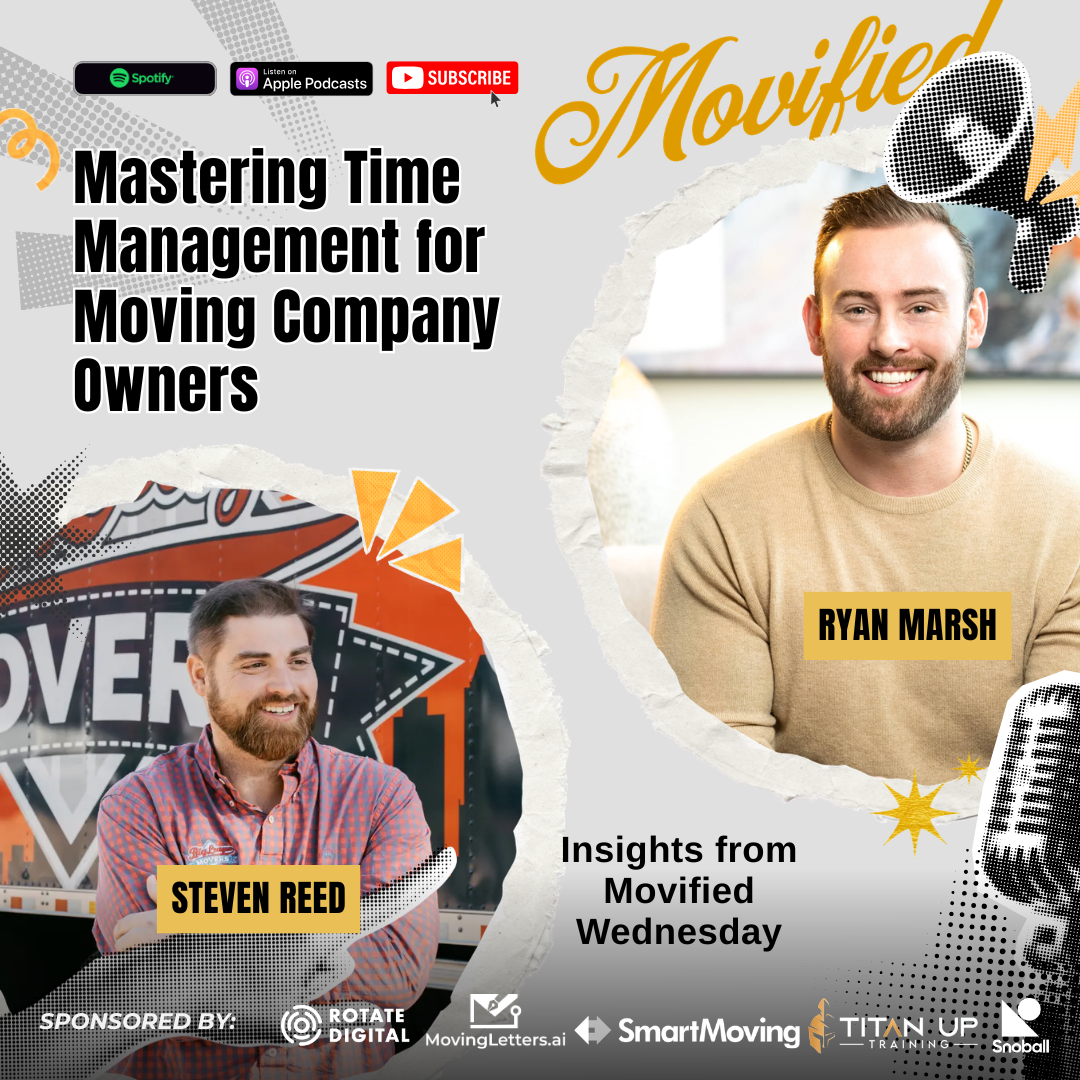
In this episode of Movified Wednesdays, host Mark Hirschi sat down with Ryan Marsh of Supermove and Stephen Reed of Ready Rolls and Big League Movers to discuss how moving company owners can take back control of their days. Their advice is practical, industry-tested, and designed for leaders who want to grow without burning out.
This blog unpacks their insights into time management for moving company owners and shows how you can apply them to your business.
Key Takeaways
What You’ll Learn:
- Energy management is as important as time management.
- Time-blocking and daily routines help owners stay in control.
- Virtual assistants and systems free up owners to focus on growth.
- Saying “no” to interruptions preserves productivity and sanity.
Table of Contents
Energy Management Comes First
The conversation began with a surprising but critical point: time is useless without energy. Mark shared how he realized his workouts were leaving him drained rather than energized. A naturopath explained that the intensity was spiking his sugar levels and disrupting balance.
Ryan echoed the reality of burnout. After attending back-to-back trade shows in multiple cities, he ended up sick. The lesson was clear: running a moving company is demanding enough without ignoring personal energy. Owners must pay attention to rhythms, rest, and consistency to bring their best selves to the business.
Time-Blocking and Structure for Movers
Ryan uses time-blocking to create space for work, family, and personal time. He follows a simple rule: if a task takes less than two minutes, finish it immediately. This prevents small jobs from piling up and stealing focus.
Stephen has a stricter routine. His day starts at 3 a.m. with reading, followed by creative work with his VA, exercise, and family breakfast. By 9 a.m., he is ready for structured meetings. Importantly, he builds 15-minute buffers between meetings to reset and avoid carrying stress into the next task—or into family time later.
For moving company owners, this structure ensures the day doesn’t slip into chaos. Blocking out time and respecting those blocks is a way of protecting both the business and personal life.
Delegating with VAs and EAs
One of the most valuable strategies discussed was the use of virtual assistants (VAs) and executive assistants (EAs). Stephen explained how Ready Rolls onboards assistants:
- First, they gain delegate access to calendars and emails.
- Next, they study the owner’s communication style and begin drafting replies.
- Over time, they handle routine communication and scheduling without constant oversight.
Mark added that his assistant flags emails and checks back at the end of the day, creating accountability. This system ensures nothing falls through the cracks while freeing him to focus on higher-value work.
For movers, the takeaway is simple: if you repeat a task often, systemize and delegate it. From customer follow-ups to social media, VAs can handle the routine so you can lead the company.
Avoiding the “Got a Second?” Trap
Stephen coined a term familiar to every owner: the GAS meeting, short for “Got a second?” These interruptions, often innocent, can drain 30–45 minutes of valuable time. His solution is to schedule 15-minute check-ins, giving team members a safe space to ask questions without derailing the day.
Ryan admitted that this is a weakness for him—he rarely says no. Mark added that in Canadian culture, saying no feels impolite, but it is essential for preserving time. Owners must learn to set boundaries while still supporting their teams.
Reinvesting Time into Growth
Buying back time is only half the journey. The bigger challenge is deciding how to use it. Mark shared that once he delegated podcast editing, social media, and admin tasks, he suddenly had more time. The temptation was to waste it scrolling or stretching out work. The breakthrough came when he began reinvesting that time into business development, building realtor relationships, and spending focused hours with family.
Stephen’s advice is to start with this question: If you had your time back, what would you do with it? That answer should guide how you reinvest. For most owners, it means doubling down on growth activities that only they can do—networking, leadership, and vision setting.
Why Choose Movified
Movified is more than a podcast. It is a hub where moving industry professionals can learn from each other’s real-world experiences. Host Mark Hirschi, with over 110 years of family moving business legacy behind him, brings candid conversations with leaders like Ryan Marsh and Stephen Reed.
These insights are not theoretical—they come from movers who live the challenges of payroll, dispatch, customer service, and expansion every day. By tuning in, owners gain tools, shortcuts, and proven strategies to grow their companies while keeping their sanity.
Conclusion
Time management for moving company owners is not about squeezing more into the day. It is about protecting energy, structuring routines, delegating repetitive tasks, and saying no to interruptions. Most importantly, it is about reinvesting the time you reclaim into growth, family, and purpose.
As Stephen Reed put it, “The biggest change for me was building 15 minutes between meetings. It changed how I show up for my business and my family.”

Meet The Host
Mark Hirschi is the founder and host of Movified. With over a decade in the moving and storage industry, Mark combines real-world leadership experience with a passion for mentorship and elevating industry standards.