
Introduction
If you own a moving company, you already know the question customers ask the most: “Can you also store my things?” The demand is constant, and the need is urgent. Families waiting on closings, companies relocating offices, students leaving dorms, and homeowners dealing with renovations all need space—secure, flexible, and available right away.
That’s why self storage for moving companies has become a vital revenue stream. Storage doesn’t just fill a gap; it builds loyalty, increases lifetime value, and positions your brand as a full-service solution.
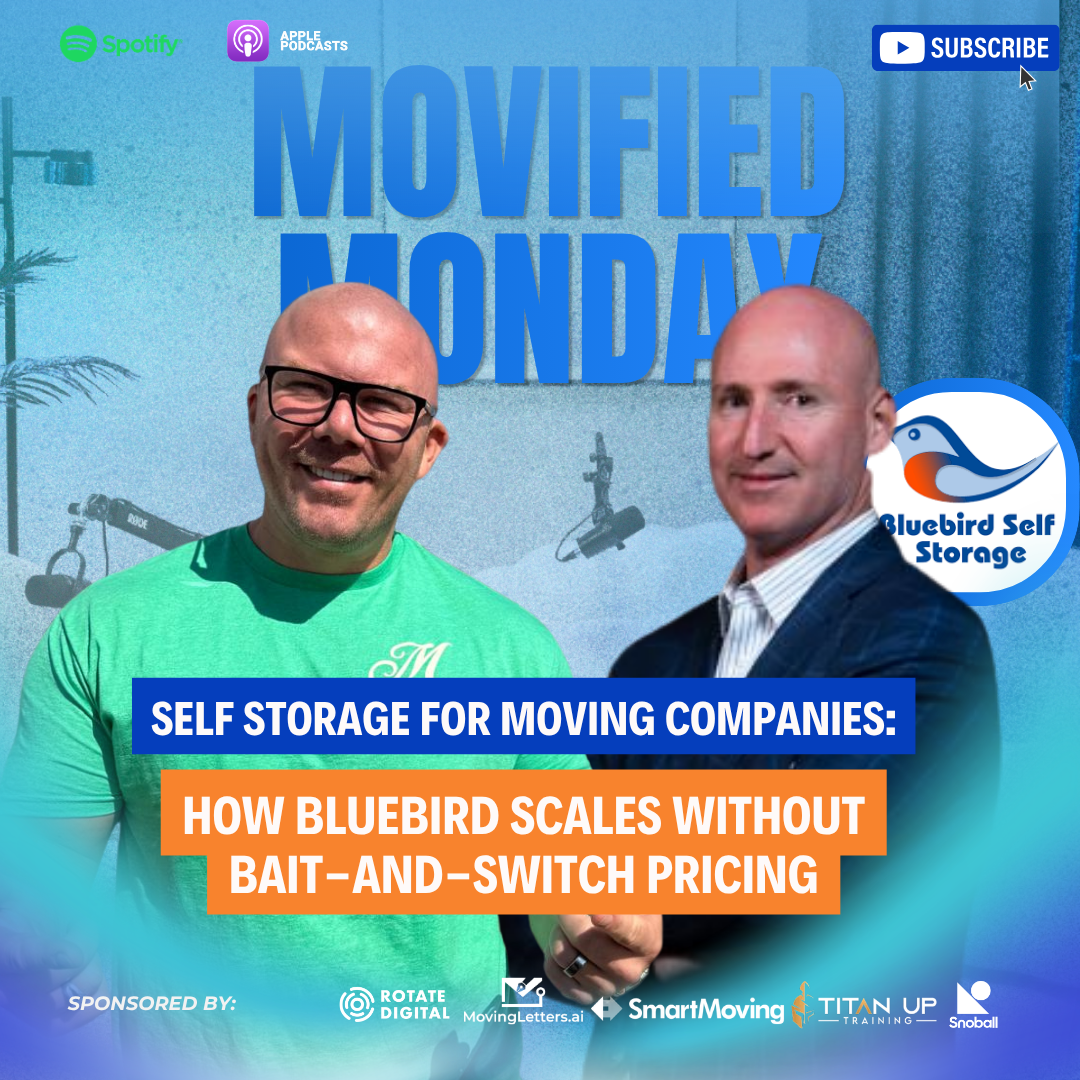
In this episode of Movified, I spoke with Jason Will, CEO of Bluebird Self Storage across Canada and Sunbird Storage in North Carolina. Jason explained how Bluebird broke away from “follow-the-leader” pricing and built a coast-to-coast boutique storage brand. We covered what makes storage profitable, why gimmicks fail, and how movers can build winning partnerships with storage providers.
This article is written for moving company owners, franchisees, and industry professionals who want clarity on storage: when to build, when to buy, when to partner, and how to avoid costly mistakes.
Key Takeaways
What You’ll Learn:
- Integrity wins long-term. Transparent pricing beats “first month free” and 28-day billing gimmicks.
- Expect a long runway. Approvals, construction, and lease-up can take 5–7 years before stabilization.
- Boutique service stands out. Local attention, onsite staff, and better amenities create reviews and referrals.
- Partnerships matter. Movers can align with storage brands for discounts, referrals, and co-marketing.
Table of Contents
The State of Self Storage for Moving Companies
Across Canada and the U.S., the storage industry looks crowded from the outside. Drive down any highway, and you’ll see multiple storage sites within a few blocks. But the numbers tell a different story.
In the U.S., the industry has matured over decades, averaging 9 square feet of storage per person. In Canada, the figure is closer to 3 square feet per person—just one-third the capacity. Combine that with Canada’s population growth rate (five times higher than the U.S.) and you get an urgent need for more space.
For moving companies, this is a massive opportunity. Self storage bridges your busiest seasons, stabilizes off-peak months, and makes you indispensable to clients who prefer one trusted partner for both moving and storage.
Why Bluebird’s Model Is Different
Boutique Service vs. Chain Mentality
Many large operators rely on scale, not service. They manage thousands of sites, which can dilute customer care. Bluebird chose the opposite approach. By focusing on boutique operations—smaller portfolios per region—they deliver local attention, staff presence, and fast responsiveness.
For movers, this is critical. Nothing derails a move like a broken gate, an inaccessible elevator, or a facility with zero staff onsite. Bluebird’s model reduces those risks.
Transparent Pricing vs. Bait-and-Switch
A common industry trick is billing every 28 days (13 cycles per year) or offering a deep discount for the first month, only to raise rates after 90 days. While legal, it damages trust.
Bluebird rejects these tactics. Their lease guarantees no rent increases for 365 days, and even after that, they adjust at most once per year. This not only keeps customers happy but also reduces churn.
“If I tell you a unit is $50 and then raise it to $150 in three months, I may not have broken the law—but I’ve broken your trust.” — Jason Will
For movers, aligning with storage providers who share your values of integrity helps protect your reputation.
Customer Experience: Beyond Boxes and Tape
Most facilities sell boxes, tape, and mattress bags. Bluebird takes retail further. They stock organization supplies, water bottles, and home staging tools. These aren’t big profit items, but they create convenience for clients who don’t know what they need until they see it.
The result? A stronger customer experience, better reviews, and higher referrals—three things movers thrive on.
How to Execute: Build, Buy, or Partner
Option A: Build From the Ground Up
Building your own facility gives you maximum control but also maximum risk.
What it takes:
- Land: ~1–1.5 acres in suburban or mixed-use zones. In Vancouver, land can cost CAD $10M per acre.
- Time: 2–4+ years for entitlements, 12–18 months construction, 3–4 years lease-up.
- Capital: Deep reserves to cover payroll, taxes, utilities, and marketing with little revenue in early years.
Pros: Brand control, modern design, long-term equity.
Cons: High upfront cost, long negative cash flow runway, regulatory hurdles.
Option B: Buy an Existing Facility
Acquisition can be faster, but it requires careful underwriting.
Checklist:
- Operations audit: Were customers exposed to bait-and-switch pricing? Are marketing and websites modern?
- Facility audit: Security systems, climate control, elevator access, docks.
- Financial audit: Validate taxes, wages, utilities, and marketing spend.
Pros: Faster to market, existing revenue, possible value-add opportunities.
Cons: Retrofit costs, cultural challenges, hidden issues.
Option C: Partner With a Premium Brand
If you don’t want to own or operate storage, partnering is a smart path.
Steps:
- Set standards: Transparent pricing, staffed presence, restricted hours to reduce crime.
- Negotiate terms: Discounts for your clients, referral agreements, co-marketing rights.
- Leverage marketing: Cross-listing on websites, signage in facilities, community partnerships like Shelter Movers.
Pros: Low cost, fast expansion, strengthens your brand.
Cons: Less control, reputation depends on your partner’s quality.
The “Cash-Flow Valley” Problem—and Its Solution
The Problem
New developers often underestimate timelines and operating costs. Some are told they’ll be “full in 9 months.” Reality is very different.
- Entitlements: 2–4+ years
- Construction: 12–18 months
- Lease-up: 36–48 months
- Costs: Payroll, utilities, taxes, marketing—from day one
This creates a cash-flow valley: years of negative cash flow before stabilization.
Why Choose Movified
Movified is your insider access point to the moving and storage industry. With over 110 years of moving heritage behind the mic, we bring you conversations with operators who have actually scaled brands—not just theorized about it.
By tuning into Movified:
- You hear directly from CEOs like Jason Will who manage millions of square feet across borders.
- You gain actionable frameworks for pricing, partnerships, and growth.
- You access a community of movers and franchisees sharing strategies, wins, and lessons.
Conclusion
Self storage for moving companies is no longer optional. It is the key to customer retention, off-season stability, and long-term profitability. But execution requires patience, transparency, and alignment with the right partners.
Bluebird’s journey shows that boutique service, ethical pricing, and community focus aren’t just good values—they’re good business.
“Win with trust, not tricks. The long game always pays.” — Movified

Meet The Host
Mark Hirschi is the founder and host of Movified. With over a decade in the moving and storage industry, Mark combines real-world leadership experience with a passion for mentorship and elevating industry standards.