

Introduction
Buying an existing moving company is one of the fastest ways to grow in this industry—but it’s also one of the most complicated. Unlike opening a new branch or adding a truck, an acquisition means inheriting staff, systems, equipment, tariffs, and sometimes even a warehouse. One mistake in due diligence or financing can cost you years of hard work.
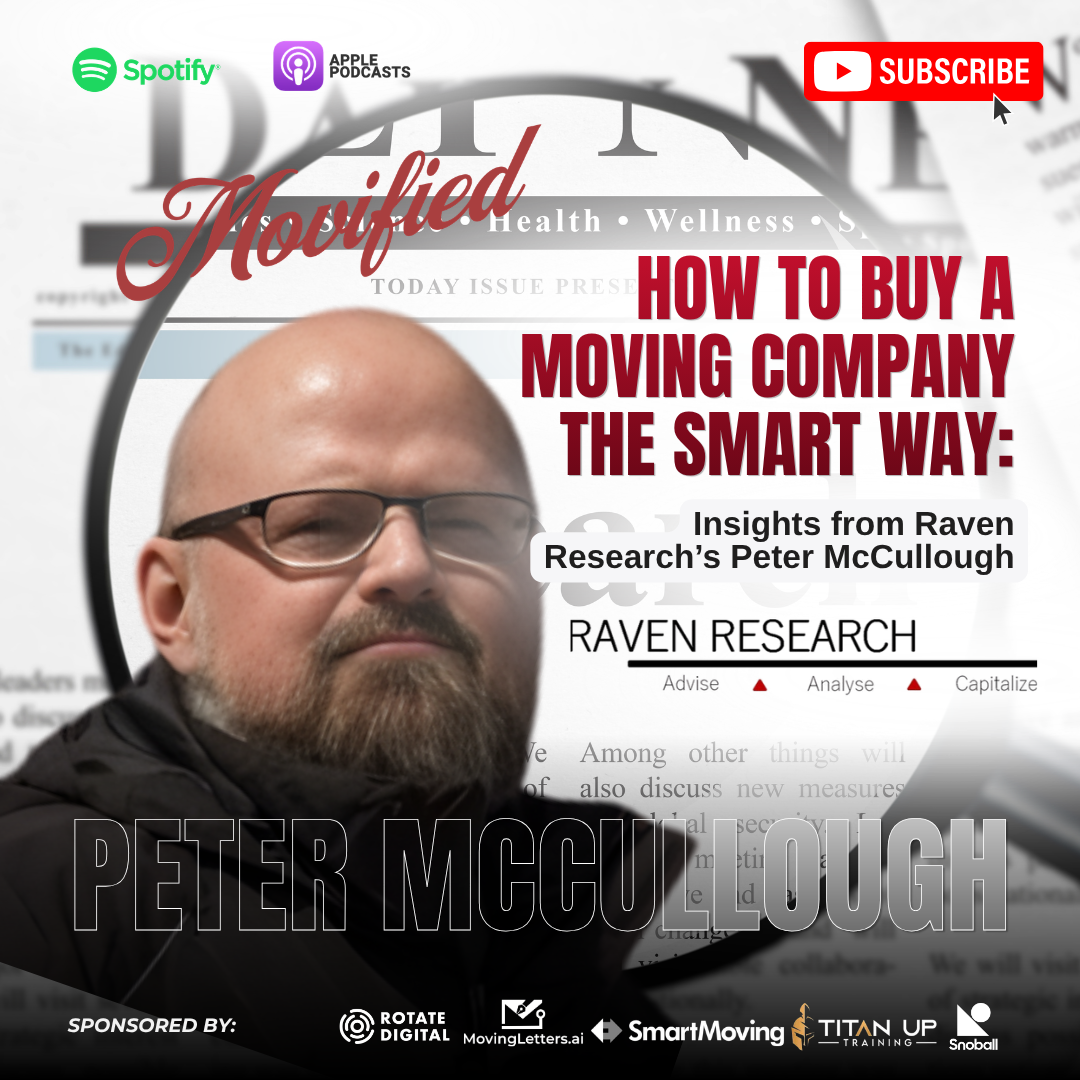
On this episode of the Movified Podcast, host Mark Hirschi of Salmon’s Moving & Storage sat down with Peter McCullough from Raven Research. With over 25 years in logistics and moving—including owning and selling his own agency—Peter now helps movers navigate mergers and acquisitions. Together, they unpacked what really goes into buying a moving company and why so many get it wrong.
This article distills their conversation into a practical roadmap for movers, franchisees, and industry professionals who want to learn how to buy a moving company and succeed.
Key Takeaways
What You’ll Learn:
- Acquiring a moving company requires breaking down revenue streams—not just looking at consolidated financials.
- Vendor take-back financing is a common and powerful tool for structuring deals.
- Real estate (warehouses) often has more long-term value than the moving business itself.
- Share sale vs. asset sale decisions affect both taxes and liability.
- Integration after the deal—tariffs, staff, systems—is just as important as closing the purchase.
Table of Contents
Why Buying a Moving Company is Different
Unlike buying a restaurant or retail shop, moving companies come with layers of complexity.
Tariffs and Regulations
Legacy van line movers operate under detailed tariffs—often 60+ pages long—that govern pricing. These cannot be ignored or easily simplified.
“You can want to change tariffs, but you can’t change what you acquired. Tariffs are part of the business,” explained Peter McCullough.
Generational Shift
The industry is undergoing a turnover. Long-time owners are ready to retire, while younger, data-driven entrepreneurs are stepping in. This creates opportunity but also reveals sellers who may not fully understand their numbers.
Business Mix
A $5 million moving company could break down as:
- $1M local moves
- $2M long-distance van line jobs
- $1M commercial relocations
- $1M storage and warehousing
Each division has unique risks. If you only know local moving, taking on heavy van line or commercial work without preparation could backfire.
The Hidden Challenges of Moving Company Acquisitions
Looking at top-line revenue isn’t enough. Peter explained how acquisitions can hide major issues.
Consolidated Financials
Sellers often provide only consolidated profit and loss statements. Without a breakdown by division, you can’t see which business units are profitable and which are losing money.
Weak Financial Management
Many owners know trucks better than spreadsheets. Common issues include:
- Crews billing 10 hours while jobs are only invoiced for 8.
- Storage underbilled or underutilized.
- Overtime untracked.
- Delivery contracts priced too low to cover labor.
Assuming All Moving Is the Same
Local, long-distance, office moves, and piano deliveries each require different expertise. Treating them the same is a recipe for failure.
Step-by-Step: How to Buy a Moving Company
Peter McCullough outlined a structured approach to acquisitions.
Step 1: Gauge Your Interest
Be honest about your commitment. If you’re not ready to invest the time, don’t begin.
Step 2: Conduct Due Diligence
Examine the company in detail:
- Break down revenue into local, long-distance, commercial, and storage.
- Assign high and low values to every truck, trailer, forklift, and vault.
- Analyze contribution margins.
- Identify inefficiencies such as payroll mismatches or poor job costing.
Step 3: Structure the Deal
Three common structures are:
- Asset Sale: Clean, fewer liabilities, but higher taxes for the seller.
- Share Sale: Better for the seller’s taxes but riskier for the buyer.
- Vendor Take-Back Financing: The seller finances part of the purchase, reducing bank debt.
Step 4: Plan for Integration
Closing the deal is just the start. Prepare for:
- Tariff management.
- Union contracts.
- Staff culture shifts.
- Technology and CRM integration.
Case Study: Salmon’s Moving & Storage Acquisition
When Mark Hirschi acquired Salmon’s Moving & Storage, the challenges were real:
- Tariffs: As a local mover before, Mark had no experience with tariffs.
- Unionized Workforce: Salmon’s is the only unionized moving company in Canada.
- Multiple Divisions: Local, long-distance, commercial, and storage required oversight.
The acquisition closed in eight months—fast for a legacy mover. The timing was strategic: before summer peak season, ensuring immediate cash flow.
Financing Your Acquisition the Right Way
Vendor Take-Back Financing
In many deals, the seller carries part of the financing. For example, in a $1M purchase, the seller may hold $500,000 over five years, while the buyer secures $500,000 in bank financing.
Bank Debt
Banks typically require at least 20% down. Without it, creative solutions and seller flexibility are essential.
Operational Efficiencies
Many deals hide inefficiencies that buyers can correct, such as untracked overtime or underpriced contracts. These fixes generate cash flow that can help service debt.
Warehouses and Real Estate: The Bigger Picture
Often the warehouse is worth more than the moving company itself.
Example:
- Operating company valued at $1M.
- Warehouse valued at $2M–$5M.
Structuring the Deal
- Banks require ~20% down.
- Vendor financing can bridge the gap.
- Securing ownership early matters since property values typically rise faster than business valuations.
Peter noted:
“In many acquisitions, the building is worth more than the moving company. Structure it properly, or you’ll lose the bigger opportunity.”
Why Choose Movified
Movified is the leading podcast and content hub for moving professionals. When you engage with Movified, you get:
- Real-world insights from experts like Peter McCullough.
- Case studies from across North America.
- Actionable strategies to grow and scale your business.
With over a century of combined experience, Movified is trusted by movers, franchisees, and industry professionals alike.
Conclusion
Buying a moving company is one of the best ways to scale quickly, but it requires more than cash and ambition. As Mark Hirschi and Peter McCullough discussed, success lies in preparation:
- Break down the business mix.
- Use vendor take-back financing when needed.
- Recognize the value of warehouses and real estate.
If you’re serious about learning how to buy a moving company, start by listening to the experts who have lived it.
“If the seller wants all cash, you’ll grind them on price. If they’re willing to finance, you can often pay more—and still make it work.” — Peter McCullough, Raven Research

Meet The Host
Mark Hirschi is the founder and host of Movified. With over a decade in the moving and storage industry, Mark combines real-world leadership experience with a passion for mentorship and elevating industry standards.