
Introduction
Acquiring another moving company can be one of the boldest—and riskiest—decisions an owner makes. Without a plan, you inherit more problems than profits. But with a clear moving company acquisition strategy, you can expand into new territories, strengthen your brand, and even double your sales.
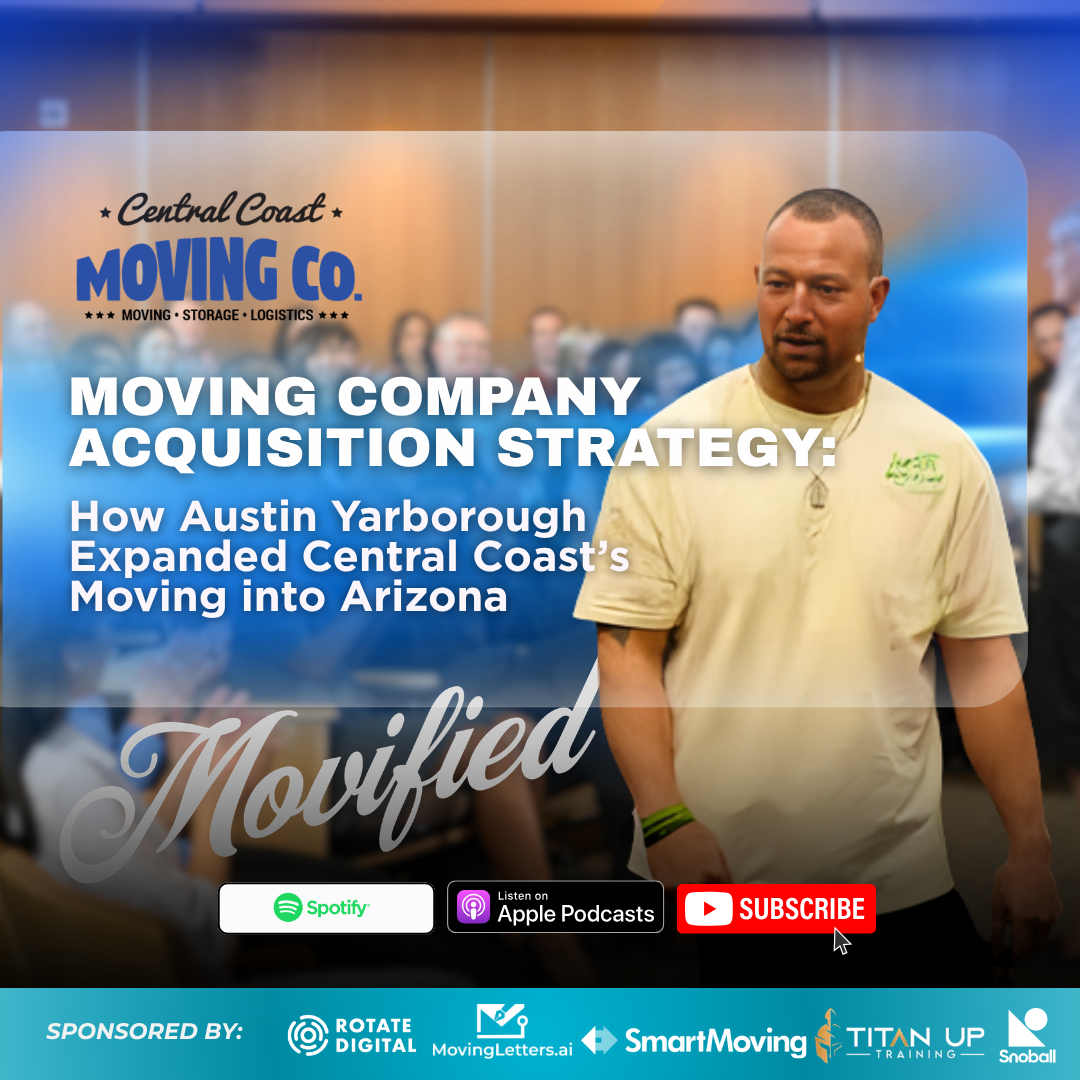
In this episode of the Movified Podcast, hosts Mark Hirschi and Steven Reed unpack the incredible journey of Austin Yarborough, owner of Central Coast Moving, Pearson’s Moving & Storage, and The Moving Army. Austin shares exactly how he acquired Pearson’s in Arizona, integrated new systems, and turned operations leaders into six-figure closers.
This post breaks down his lessons into a practical guide for moving company owners, franchisees, and industry professionals who want to scale without chaos.
Key Takeaways
What You’ll Learn:
- You don’t just buy trucks—you buy the seller’s culture, habits, and reputation.
- Integration is key: phones, CRMs, and branding must align quickly.
- Ops leaders can become high-performing sales reps with role-play and coaching.
- Personal brand attracts opportunities—speak openly about your growth goals.
Table of Contents
Why a Moving Company Acquisition Strategy Matters
Many owners are tempted by deals: a couple of trucks, a yard, maybe a half-million in sales. But as Austin points out, the quality of the business you buy reflects the habits of the previous owner.
“You don’t just buy equipment—you buy the owner’s decisions, their culture, and their reputation.” — Austin Yarborough
That’s why a strong moving company acquisition strategy starts with evaluating more than balance sheets. Ask yourself:
- Maintenance: Are the trucks serviced or neglected?
- Reputation: Do reviews show trust or complaints?
- Team: Are staff trained and loyal, or burned out?
- Leadership: Will the seller stay on to ease the transition?
What Makes This Strategy Different
Most acquisitions happen through brokers or listings. Austin’s deal came through personal branding and networking.
By consistently sharing his growth journey—through social media posts, podcasts, and industry events—he attracted sellers who trusted him.
A) The Power of Personal Brand
Austin stopped hiding behind the Central Coast brand and stepped forward as himself. He shared:
- Leadership insights
- Fitness and discipline routines
- Sales strategies and scripts
- The real highs and lows of ownership
That transparency built trust. So when Pearson’s owner was ready to exit, Austin was the first call.
B) Culture Over Trucks
It’s easier to replace a motor than repair a damaged reputation. Austin stresses the importance of cultural alignment:
- How do they hire?
- How do they treat clients?
- Do they maintain strong industry relationships?
“The business you buy reflects the previous owner. Their culture becomes your culture.” — Austin Yarborough
How to Execute an Acquisition in 90 Days
Austin laid out a clear 90-day integration playbook that any owner can follow.
First 30 Days: Secure Revenue
- Phones: Merge all lines into one HQ number (e.g., an 888 number).
- CRM: Add the new branch into your existing system (like SmartMoving) instead of juggling accounts.
- Templates: Align emails, estimates, and SMS templates. Dual branding is fine short-term.
- Transition: Keep the seller for 90–120 days to maintain key relationships.
Days 31–60: Align Processes
- Rates & Policies: Standardize billing, hourly minimums, and valuation practices.
- Fleet: Apply your maintenance schedule immediately.
- KPIs: Create a unified dashboard for sales, conversion, and booked revenue.
- Leadership Rhythm: Hold consistent weekly meetings across both branches.
Days 61–90: Unlock Growth
- Train Ops to Sell: Identify leaders in operations. Coach them into sales roles.
- Daily Role-Play: Practice discovery calls and objections every morning.
- Marketing Update: Refresh Google Business Profiles and local SEO to reflect the acquisition.
Example: After just one month in sales, Central Coast ops supervisor Nate Avery closed over $100,000 in revenue.
Case Study: Central Coast Moving Expands into Arizona
When Central Coast Moving acquired Pearson’s Moving & Storage, Austin wasn’t just buying trucks. He was entering a new state with different labor laws, pay structures, and hiring markets.
The Challenges
- Legal differences: California vs. Arizona regulations.
- Systems: Two SmartMoving accounts to unify.
- Sales: Pearson’s had no sales team; the owner handled it all.
The Solutions
- One HQ Number + Unified CRM
A single phone line and one CRM branch ensured clean tracking and no lost leads. - Ops-to-Sales Training
Nate Avery, previously an ops supervisor, became a top closer with role-play and coaching. - Personal Brand Fuel
Austin’s transparency attracted buy-in from staff, partners, and even future acquisition prospects.
The Results
- Cleaner Calls: No lost estimates from split systems.
- Six-Figure Sales: Ops converted into closers, hitting $100K in month one.
- Cultural Continuity: Pearson’s reputation was preserved while systems scaled.
“A strong moving company acquisition strategy is not about trucks—it’s about people, processes, and positioning.” — Mark Hirschi
Why Movers Trust Movified
Movified isn’t just a podcast—it’s the industry’s trusted growth hub.
- Insider Access: Real movers with real numbers share proven strategies.
- Credibility: Hosted by Mark Hirschi, veteran owner of Salmon’s Moving & Storage and Ellis Moving & Storage.
- Actionable Content: From SOPs to scripts, every episode delivers tools you can use tomorrow.
When you learn with Movified, you’re learning from owners who’ve done it—whether it’s moving entire libraries or acquiring seven-figure companies.
Conclusion
Scaling by acquisition doesn’t have to be chaotic. With a proven moving company acquisition strategy, you can:
- Unify systems quickly.
- Train ops into high-performing sales staff.
- Attract opportunities with your personal brand.
Austin Yarborough’s story shows what’s possible when culture, systems, and branding align.
“You don’t have to make a decision today. But if you want growth tomorrow, start building your acquisition strategy now.” — Movified

Meet The Host
Mark Hirschi is the founder and host of Movified. With over a decade in the moving and storage industry, Mark combines real-world leadership experience with a passion for mentorship and elevating industry standards.